
Sports fans have always searched for an edge. Decades ago, that meant scanning box scores in the morning paper. Today, it means watching probabilities shift in real time as games, injuries, and headlines reshape expectations.
Prediction markets have grown from niche experiments into trusted indicators of where seasons may be headed. Unlike traditional sportsbooks, they rely on peer-driven price discovery rather than house-set lines.
That structural change has elevated prediction market odds from curiosity to live signals. They now reflect consensus, react instantly to news, and increasingly influence conversations across the sports world.
The Power of Real-Time Consensus
At their core, prediction markets let participants, not bookmakers, shape prices, changing how odds form, move, and influence the sports conversation.
Peer-Driven Price Discovery
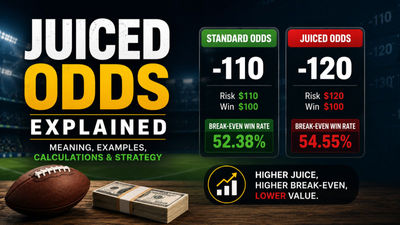
Traditional sportsbooks set lines internally and build in a margin. Prediction markets trade contracts, often between $0 and $1, where a $0.65 price reflects a 65% implied probability. The number moves based purely on supply and demand.
That difference matters in fast-moving sports markets. Prices are not strategically shaded by a house; they emerge from collective positioning and conviction across thousands of participants.
Instant Reaction to Breaking News
When news breaks, markets respond immediately across active trading platforms nationwide. A late injury scratch, unexpected lineup change, or trade rumor can trigger sharp probability swings within minutes.
Many serious fans track live prediction markets odds to watch that reaction unfold in real time, especially when a single update reshapes a team’s outlook.
Speed in a 24/7 Sports Cycle
Modern sports coverage never pauses in today’s always-connected media environment. Analysts debate, social media reacts, and headlines spread instantly. Prediction markets mirror that pace.
Probabilities often shift before commentators finish their analysis, creating a live consensus that evolves alongside the news cycle. In an environment built on immediacy, that speed gives market-driven odds added relevance.
Scale Changes the Equation
Prediction markets are no longer thin, lightly traded sidelines. Liquidity has transformed them into mainstream forecasting tools. Higher participation has tightened pricing and improved overall market efficiency.
Recent growth metrics tell the story:
Annual trading volume is rising from roughly $15.8 billion to over $63 billion year on year,
Weekly volume surpassing $2 billion,
Record single-day activity exceeding $700 million,
Sports-related contracts are driving a significant share of total activity.
Liquidity strengthens price efficiency. As more participants enter positions, probabilities tighten and better reflect the broad consensus. Deeper markets are harder to distort and quicker to correct when new information surfaces.
Sports have become the engine behind that scale. Regular seasons, playoffs, award races, and offseason speculation create steady activity that sustains liquidity year-round. When billions of dollars move through these platforms, their signals carry far more weight.
Access Is Expanding the Audience
Structural accessibility has widened participation. Prediction markets often operate under federal oversight as event contracts, allowing participation in jurisdictions where traditional sportsbooks face limitations.
Retail integration has accelerated growth. Prediction markets embedded in familiar financial apps have reached a broader audience, with platforms like Robinhood reporting billions of contracts traded in a single month.
Simplicity plays a role as well. Yes-or-No structures remove complexity. Participants don’t need to decode point spreads or alternate lines. The contract answers a single question: Will this event happen?
Lower barriers mean more participants. More participants mean greater consensus. Broader participation also increases liquidity, improving price stability. That cycle reinforces why prediction market odds carry increasing influence.
Innovation Is Reshaping the Experience
Prediction markets have also benefited from rapid product evolution. Hybrid models launched by major sportsbooks now blend exchange-style trading with familiar betting interfaces, blurring traditional distinctions.
Transparent order books allow users to see the depth behind a price move. Real-time probability graphics increasingly appear during live broadcasts. Some platforms operate with near-continuous settlement capabilities, matching the always-on pace of digital markets.
Technology has pushed these platforms closer to financial infrastructure than casual side products. Market probabilities are increasingly referenced in forecasting analysis, reflecting confidence in crowd-sourced accuracy.
Innovation has shifted perception. What once felt experimental now resembles a durable layer within the sports economy. Major platforms and leagues increasingly treat these markets as long-term infrastructure rather than short-term trends.
The Market Now Shapes the Narrative
Odds no longer sit quietly in the background. They increasingly influence how sports stories develop and gain momentum. Probability shifts now generate headlines of their own during major moments.
Media outlets now reference live probabilities when debating MVP races or championship outlooks. A jump from 40% to 65% on a title contract quickly becomes part of the discussion, while award and trade markets often act as early signals for breaking news.
Many fans pair shifting probabilities with deeper matchup breakdowns and trend analysis from sources like FanDuel Research, blending market sentiment with structured insight to track how a season is unfolding.
Broadcasts increasingly display live probabilities as real-time probability graphics, replacing static predictions with dynamic updates. Prediction markets no longer just reflect the conversation; they increasingly help steer it.
The Next Phase of Market-Driven Sports Engagement
Momentum rarely builds quietly in sports, and prediction markets have followed the same path. What began as a niche experiment has accelerated into mainstream awareness and access, fueled by participation and constant activity.
Real-time consensus, deeper liquidity, broader access, and steady product innovation have elevated their influence. Billions in annual trading volume point to sustained engagement, while media integration underscores growing cultural relevance.
Prediction markets odds now represent more than a wager. They operate as living probabilities shaped by collective intelligence, often reacting faster than commentary and sometimes anticipating it.