

A parlay bet is a single wager that combines two or more selections into one bet, where every selection must win for the bet to pay out.
In simple terms:
👉 Parlay = multiple bets combined into one, all must win
You might also hear it called an accumulator (acca) in the UK.
Parlay Bets are popular because they offer:
Higher payouts from smaller stakes
A more exciting betting experience
But they also come with a key downside:
👉 The more selections you add, the harder it becomes to win.
In this guide, you’ll learn exactly how parlays work, how payouts are calculated, real examples, and when (and when not) to use them.
What Is a Parlay Bet?
Definition & Basics
A parlay bet combines multiple individual bets—called legs—into a single wager.
For example, instead of placing separate bets, you combine:
Team A to win
Team B to win
Over 2.5 goals in another match
All of these go into one bet slip.
Parlays can include:
Moneyline bets (who wins)
Totals (over/under)
Player props
The most important rule:
👉 If one leg loses, the entire parlay loses.
How Parlays Work
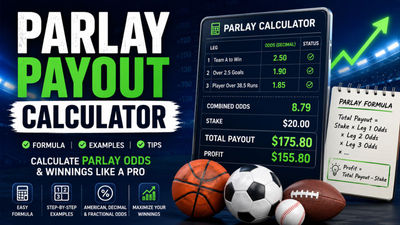
Parlays work by multiplying the odds of each selection together.
This creates:
Bigger payouts
Higher risk
Here’s the difference:
Single bet → fixed payout
Parlay → compounded payout
Example:
If each selection has odds of 2.00:
Single bet → 2.00 return
3-leg parlay → 2.00 × 2.00 × 2.00 = 8.00 odds
But remember:
👉 Even if most selections win, one loss cancels the entire bet.
Types of Parlay Bets
Classic Multi-Leg Parlays
This is the standard format.
Minimum: 2 selections
Common range: 2–6 legs
The trade-off is simple:
Fewer legs → higher probability
More legs → higher payout
Same-Game Parlays (SGPs)
A same-game parlay combines multiple bets from a single match.
Example:
Team A to win
Over 2.5 goals
Player to score
Why they’re popular:
Easy to follow one game
Higher payouts for correlated outcomes
However:
Odds may be adjusted
Some combinations are restricted
Teasers & Round Robins
These are more advanced versions.
Teasers:
Adjust point spreads in your favor
Lower payout, lower risk
Round Robins:
Split one large parlay into multiple smaller parlays
Reduce total risk
Example:
A 4-leg round robin creates several 2-leg and 3-leg bets.
Parlay Examples & Payout Calculations
Example 1 – 3-Leg NFL Parlay
Stake: ₹1,000
Selection | Odds |
Packers to win | 1.90 |
Chiefs to win | 2.00 |
Ravens to win | 1.95 |
Step 1: Multiply odds1.90 × 2.00 × 1.95 = 7.41
Step 2: Calculate payout₹1,000 × 7.41 = ₹7,410
Profit: ₹6,410
👉 If one team loses → full ₹1,000 is lost.
Example 2 – 4-Team Soccer Parlay
Stake: ₹500
Selections:
Team A win – 1.80
Team B win – 2.10
Over 2.5 goals – 1.75
Both teams to score – 1.65
Combined odds:
1.80 × 2.10 × 1.75 × 1.65 = 10.90
Return: ₹5,450
This shows how payouts grow quickly—but so does risk.
Same-Game Parlay Example
Match: Liverpool vs Chelsea
Selections:
Liverpool to win
Over 2.5 goals
Salah to score
Because these bets are related:
Odds may be slightly reduced
Not all combinations are allowed
Still, they offer strong payout potential for a single game.
Parlay vs Single & Accumulator Bets
Differences Explained
Bet Type | Risk | Payout | Complexity |
Single Bet | Low | Low | Simple |
Parlay Bet | High | High | Moderate |
Single bets → independent results
Parlays → all selections must win
If you're new, explore a single vs multiple bets guide to understand how these differ in practice.
Accumulator (UK) vs Parlay (US)
There is no difference in structure.
UK → Accumulator (Acca)
US → Parlay
Same concept, different name.
Pros & Cons
Pros:
High payouts from small stakes
More engaging betting experience
Flexibility across multiple markets
Cons:
Low probability of winning
One mistake ruins the bet
Easy to overestimate chances
Parlay Betting Strategies & Tips
Limit the Number of Legs
This is the biggest beginner mistake:
👉 Adding too many selections
Better approach:
Stick to 2–4 legs
Focus on quality bets
Shop for the Best Odds
Small differences matter more in parlays.
Example:
1.90 vs 2.00 seems minor
Across multiple legs → big impact
Bankroll & Unit Discipline
Parlays are high-risk bets.
Best practice:
Use 1–3% of your bankroll per parlay
Avoid chasing losses
You can learn more in our bankroll management guide.
Use Parlay Insurance & Bonuses
Some sportsbooks offer:
Refund if one leg loses
Bonus bets
These can reduce risk—but always check terms carefully.
FAQs
What does parlay mean in betting?
A parlay is a single bet combining multiple selections, where all must win for the bet to pay out.
How do you calculate parlay payouts?
Multiply all odds together, then multiply by your stake.
Formula:Odds × Odds × Odds × Stake = Total payout
Do all legs have to win?
Yes. If one leg loses, the entire parlay loses.
Can I cash out a parlay?
Some sportsbooks allow cash out before all events finish, but availability depends on the platform.
How many legs can I include?
Typically:
Minimum: 2
Maximum: 10–15 (varies by sportsbook)
What is a same-game parlay?
A same-game parlay combines multiple bets within a single match, such as outcome + goals + player stats.
Are parlays good for beginners?
They can be fun, but they are high-risk.
Beginners should:
Start small
Avoid large parlays
Focus on learning fundamentals
Parlays are one of the most exciting bet types in sports betting.
They offer the chance to turn a small stake into a large return—but they demand discipline.
👉 The key is balance.
Use parlays selectively, keep your stake controlled, and build your strategy around consistency—not big wins.
If you want to improve further, explore guides on betting odds, bankroll management, and betting strategies to develop a stronger long-term approach.