

Introduction: How Bookies Create Odds
Sportsbooks set odds by estimating how likely an outcome is, adding their margin, and then adjusting the price as money, news, and market risk change.
That is the simple version.
A sportsbook is not only trying to predict who will win. It is trying to create a price that attracts bets, protects the book from heavy exposure, and includes a built-in profit margin called the vig or juice.
For bettors, this matters because odds are not just numbers on a screen. They reflect probability, public opinion, sharp betting action, injuries, weather, team news, and the sportsbook’s own risk position.
Here is the basic process:
Step | What Happens |
1. Estimate probability | The sportsbook estimates how likely each outcome is |
2. Add margin | The bookmaker builds in vig or juice |
3. Open the line | The first public odds are released |
4. Watch the market | Bettors, including sharp bettors, react |
5. Adjust the odds | The sportsbook moves the line to manage risk and reflect new information |
If terms like betting line or vig/juice are new to you, they are central to understanding how sportsbooks set odds.
This guide explains how betting odds are created, why odds change before a game, what factors influence the price, and what this means for bettors.
What Is Vig and Overround?
Vig, also called juice, is the sportsbook’s built-in commission. It is one of the main ways sportsbooks make money.
If odds were perfectly fair, they would reflect the true probability of each outcome with no extra margin. But sportsbooks are businesses. They adjust prices slightly in their favour so they can make money over time, especially when betting action is reasonably balanced.
That built-in margin is often called the overround.
Simple Vig Example
Imagine a basketball game where both teams are evenly matched.
A fair price might look like this:
Team | Fair Decimal Odds | Implied Probability |
Team A | 2.00 | 50% |
Team B | 2.00 | 50% |
Total | — | 100% |
But a sportsbook may offer this instead:
Team | Sportsbook Odds | Implied Probability |
Team A | 1.91 | 52.36% |
Team B | 1.91 | 52.36% |
Total | — | 104.72% |
The total implied probability is now above 100%. That extra 4.72% is the sportsbook’s margin.
This does not mean the sportsbook wins every individual bet. It means the odds are built so the bookmaker has a long-term edge across many bets and markets.
Why Vig Matters for Bettors
Vig matters because it reduces your potential return.
For example:
At fair odds of 2.00, a $100 winning bet returns $200 total.
At sportsbook odds of 1.91, a $100 winning bet returns $191 total.
That $9 difference is part of how the sportsbook protects its business.
This is also why two sportsbooks can offer different prices on the same game. One may use a higher margin, one may be taking different betting action, or one may have a different view of the market.
If you want to go deeper into the business side, TBP’s guide on how betting sites make money explains the broader model.
How Sportsbooks Set the Opening Line
The opening line is the first price a sportsbook releases for a game or betting market.
To create that line, oddsmakers use a mix of data, models, experience, and market knowledge. The exact process is not public, but the main building blocks are easy to understand.
Sportsbooks usually consider:
team or player strength
recent form
injuries and suspensions
home advantage
schedule and travel
weather or playing conditions
historical matchups
public betting tendencies
expected sharp action
prices from other sportsbooks
internal risk limits
Modern sportsbooks may use algorithms, data feeds, power ratings, and trading teams. Smaller operators may also copy or closely follow respected market-making sportsbooks that open lines early.
What Are Power Ratings?
A power rating is a numerical estimate of how strong a team or player is.
For example, a sportsbook may rate two teams like this:
Team A: 86
Team B: 82
That does not automatically mean Team A will win. It gives the oddsmaker a starting point.
From there, the sportsbook adjusts for other factors.
Example:
Team A is slightly stronger.
Team A is playing at home.
Team B is missing a key defender.
The sportsbook may open Team A as the favourite.
In US sports, this may appear as a point spread, such as Team A -3.5. In football/soccer, it may appear as shorter decimal or fractional odds on Team A to win. In cricket, it may affect match-winner odds, innings runs, player props, or totals.
Why Opening Lines Are Not Final
Opening lines are starting prices, not final predictions.
Sportsbooks often release early lines at lower betting limits. This lets them see how the market reacts without taking too much risk immediately.
If respected bettors quickly attack one side, the sportsbook may move the line. If public money heavily backs a popular team, the price may also change.
That is why odds are dynamic. They are not fixed until the market closes.
Who Really Sets the Lines? Market Forces and Sharps
Oddsmakers create the opening line, but the market helps shape the final line.
This is an important distinction. A sportsbook may post the first number, but once betting starts, that number is tested by bettors.
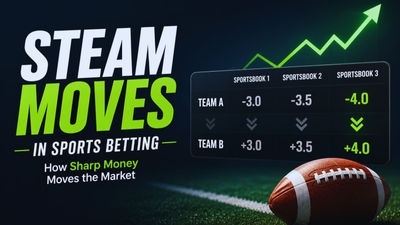
Professional or highly skilled bettors are often called sharps. If sharps believe a sportsbook has opened a soft line, they may bet quickly before the price moves.
Example:
A sportsbook opens Team A at -3.
Sharp bettors believe Team A should be closer to -4.5.
They bet Team A -3.
The sportsbook moves the line to -3.5 or -4.
The bookmaker is not only reacting to the amount of money. It is also reacting to the quality of that money.
A $5,000 bet from a respected sharp bettor may matter more than many small public bets from casual fans. Sharp action can signal that the opening price was wrong.
This is where concepts like market movement and closing line value (CLV) become useful. The closing line is the final market price before the event starts. If you regularly beat the closing line, it may suggest you are getting better prices than the market eventually agrees on.
For beginners, the key lesson is simple: sportsbooks set the first price, but sharp bettors, public money, news, and market pressure help shape the final price.
Key Factors That Influence Odds
Sportsbooks consider many factors when setting and adjusting odds. Some are obvious. Others are less visible to casual bettors.
1. Team or Player Strength
The most basic factor is quality.
A stronger team will usually be priced shorter than a weaker team. In a tennis match, the higher-ranked player may be favoured. In cricket, a team with stronger batting depth may have shorter odds.
But strength alone is not enough. The price also depends on opponent quality, conditions, and market expectations.
2. Injuries, Suspensions, and Team News
A missing key player can move odds quickly.
Examples:
A football team loses its first-choice goalkeeper.
A basketball star is ruled out before tip-off.
A cricket team rests its main fast bowler.
A tennis player enters the match carrying an injury.
The more important the player, the stronger the market reaction is likely to be.
3. Home Advantage and Venue
Home advantage still matters in many sports.
In football/soccer, crowd support and familiar conditions can affect performance. In cricket, pitch conditions and home familiarity can be significant. In US sports, travel and home-court advantage may influence spreads and totals.
Sportsbooks price these details into the market.
4. Weather and Playing Conditions
Weather can affect outdoor sports heavily.
Examples:
Heavy rain may reduce scoring in football.
Wind may affect passing and kicking in American football.
A dry cricket pitch may favour spin bowling.
Humidity may affect tennis players in long matches.
This is especially important for totals markets, such as over/under bets.
5. Schedule, Travel, and Rest
Teams do not perform in a vacuum.
A basketball team playing its second game in two nights may be weaker than usual. A football club travelling after a midweek European fixture may rotate players. A cricket team playing in extreme heat after short rest may be priced differently.
Sportsbooks account for these scheduling factors because they can affect performance.
6. Public Sentiment
Popular teams often attract more casual betting.
A famous football club, a national cricket team, or a star-heavy basketball team may get heavy public backing even if the price is not attractive.
Sportsbooks know this. Sometimes they shade the odds slightly because they expect the public to bet the popular side anyway.
7. Sharp Money
Sharp money can move a line because sportsbooks respect the source.
If early professional bettors strongly back one side, the book may adjust quickly to avoid taking more exposure at a bad price.
This is different from ordinary public betting. Public money may influence liability, but sharp money can influence the sportsbook’s view of the true price.
8. Sportsbook Liability
Liability means how much a sportsbook could lose if a certain outcome happens.
If too much money comes in on one side, the sportsbook may move the odds to:
make that side less attractive
attract bets on the other side
reduce potential payout risk
This does not mean sportsbooks always need perfect 50/50 action. But they do care about exposure.
Why Do Odds Change Before a Game?
Odds change before a game because the market keeps receiving new information.
A price that looked fair on Monday may not look fair by Friday.
The most common reasons odds move are:
injury news
team selection updates
weather changes
sharp betting action
public betting volume
betting limits increasing closer to game time
new information from other sportsbooks
risk management by the bookmaker
Example: A Point Spread Moves
Suppose a US football team opens as a -5.5 favourite.
Early in the week, sharp bettors take the underdog at +5.5 because they believe the number is too high.
The sportsbook may move the line:
Stage | Line |
Opening line | Team A -5.5 |
After sharp action | Team A -5 |
Later market price | Team A -4.5 |
This does not guarantee the underdog will cover. It only shows that the market disagreed with the opening number.
Example: Cricket Odds Move
Suppose Team A opens at 1.80 to win a T20 match.
Then the pitch report suggests the surface may favour spin bowling, and Team A has stronger spinners. At the same time, Team B’s opening batter is ruled out.
The odds may shift:
Stage | Team A Odds |
Opening odds | 1.80 |
After pitch report and team news | 1.65 |
The price changed because the market now believes Team A’s chance of winning has increased.
Example: Public Money on a Popular Team
A major football club may attract heavy betting simply because it has more fans.
If the public heavily backs that club, the sportsbook may shorten its odds. That does not always mean the team has become more likely to win. Sometimes the price moves because the book is managing demand and liability.
This is why line movement needs context. A move caused by team news is different from a move caused by public hype.
Examples of Odds Setting in Different Sports
Sportsbooks use the same broad principles across sports, but the examples look different depending on the market.
Sport | Common Market | Example Factor | How It May Affect Odds |
Football/Soccer | Match winner, handicap, totals | Star striker injured | Team odds may drift; opponent odds may shorten |
Cricket | Match winner, innings runs, player props | Pitch favours spin | Team with stronger spinners may shorten |
US Football | Point spread, moneyline, totals | Quarterback ruled out | Spread may move several points |
Basketball | Spread, moneyline, player props | Star player rested | Team spread and player markets adjust |
Tennis | Match winner, set betting, totals | Player fatigue or injury | Opponent odds may shorten |
Odds Format Example
Different regions use different odds formats, but the underlying probability idea is the same.
Format | Example | Simple Meaning |
Decimal | 2.00 | A $100 bet returns $200 total if it wins |
Fractional | 1/1 | Win $100 profit for every $100 staked |
American | +100 | Win $100 profit on a $100 bet |
In the UK, fractional odds are still common. In Europe and many global markets, decimal odds are widely used. In the US, American odds are standard.
The format changes, but the sportsbook’s process does not. The bookmaker is still pricing probability, adding margin, and managing risk.
Moneyline Example
A moneyline bet is a simple bet on who will win.
Example:
Team A: 1.60
Team B: 2.40
Team A is the favourite because the odds are shorter. Team B is the underdog because the odds are longer.
But the odds are not only saying “Team A is more likely to win.” They also include the bookmaker’s margin and the market’s reaction to betting activity.
Myths and Misconceptions
There are several common misunderstandings about how sportsbooks set odds.
Myth 1: Sportsbooks Are Only Predicting Winners
Sportsbooks do estimate probability, but they are not simply predicting winners.
They are pricing a market. That means they must consider probability, bettor behaviour, margin, and liability.
A team can be likely to win but still be a bad price for bettors.
Myth 2: Sportsbooks Always Want Exactly 50/50 Bets
Balanced action is useful because it reduces risk. But sportsbooks do not always need exact 50/50 money on both sides.
Sometimes they are comfortable taking a position. Sometimes they shade lines because they understand how their customer base bets. Sometimes they react more strongly to sharp action than public action.
The cleaner explanation is this: sportsbooks want to manage risk profitably, not necessarily split every market perfectly.
Myth 3: Odds Movement Always Means Something Is “Fixed”
Odds movement is normal.
Lines move because of injuries, team news, weather, betting volume, sharp action, and market adjustments. A price moving does not automatically mean insider information or manipulation.
Myth 4: The Best Team Is Always the Best Bet
This is one of the biggest beginner mistakes.
The best team may be overpriced. Betting is not only about who is likely to win. It is about whether the odds are worth taking.
For example, a team with a 70% chance to win can still be a bad bet if the odds imply an 80% chance.
What It Means for Bettors
Understanding how sportsbooks set odds can make you a more informed bettor, but it does not guarantee profit.
The practical value is that you start reading odds differently.
Instead of asking only, “Who will win?” you start asking:
Is this price fair?
Has the line already moved?
Is the public overreacting?
Is this movement caused by real news?
Am I getting a better number than other sportsbooks offer?
Does this bet fit my bankroll?
Practical Takeaways
Here is what beginners should learn from the odds-setting process:
Compare odds before betting. Different sportsbooks may offer slightly different prices.
Understand vig. The bookmaker’s margin affects your long-term returns.
Watch line movement carefully. A moving line may reflect new information or market pressure.
Do not chase steam blindly. If the line has already moved, the value may be gone.
Separate probability from price. A likely winner is not always a valuable bet.
Respect bankroll limits. Better understanding does not remove risk.
Sports betting is still uncertain. A strong process can reduce bad decisions, but no pricing knowledge can make outcomes guaranteed.
Legal rules also vary by country and region. Bettors in India, the UK, the US, and other markets should always check the laws where they live before placing bets.
Conclusion
Sportsbooks set odds by combining probability, data, market behaviour, and risk management.
Oddsmakers create the opening line using models, power ratings, team news, historical data, and experience. After that, the market reacts. Sharp bettors, public money, injuries, weather, and sportsbook liability can all move the price.
The most important lesson is this:
Sportsbooks are not just predicting winners. They are pricing risk.
Once you understand that, odds become easier to read. You can see why vig matters, why lines move, and why the best team is not always the best bet.
For more foundational learning, continue with TBP’s guides on betting lines, vig or juice, point spreads, and moneyline betting.
FAQs
How do sportsbooks set odds?
Sportsbooks set odds by estimating the probability of each outcome, adding a built-in margin, and adjusting prices based on betting activity and new information. Their goal is to manage risk and make a long-term profit, not simply to predict the winner.
Why do betting lines move?
Betting lines move because of new information, betting volume, sharp money, public action, injuries, weather, and sportsbook liability. A line can also move when sportsbooks adjust to match the wider market.
Do sportsbooks always want equal bets on each side?
No. Balanced action can reduce risk, but sportsbooks do not always need exact 50/50 money. They may shade lines, react to sharp bettors, or accept some liability if they believe the price is right.
What is vig or juice?
Vig, also called juice, is the sportsbook’s built-in commission. It is added to the odds so the bookmaker has a long-term edge, especially when betting action is balanced.
Who sets the betting lines: bookmakers or bettors?
Oddsmakers set the opening lines, but bettors help shape the final market. Sharp bettors, public money, and new information all influence where the line moves before the event starts.
How do oddsmakers use power ratings?
Oddsmakers use power ratings to compare the strength of teams or players. These ratings act as a starting point before adjustments are made for injuries, venue, schedule, weather, and market behaviour.
Why are odds different at different sportsbooks?
Odds differ because sportsbooks have different margins, customer bases, risk tolerance, data providers, and betting activity. One sportsbook may also move faster than another after news or sharp action.
Can bettors beat the bookmaker’s odds by understanding how they are set?
Understanding how odds are set can help bettors make more informed decisions, but it does not guarantee profit. Sportsbooks build margin into the market, and long-term success requires discipline, price awareness, and responsible bankroll management.